Myths and Facts About Marijuana
 This collection of myths and facts is based on the book Marijuana Myths, Marijuana Facts: A Review of the Scientific Evidence . A decade after the book was published, the latest scientific evidence continues to support the original findings. This collection of myths and facts is based on the book Marijuana Myths, Marijuana Facts: A Review of the Scientific Evidence . A decade after the book was published, the latest scientific evidence continues to support the original findings.
Top Five Marijuana Myths
Or click to read other common myths.
Myth: Marijuana Can Cause Permanent Mental Illness.
Among adolescents, even occasional marijuana use may cause
psychological damage. During intoxication, marijuana users become
irrational and often behave erratically.
Fact: There is no convincing scientific evidence
that marijuana causes psychological damage or mental illness in either
teenagers or adults. Some marijuana users experience psychological
distress following marijuana ingestion, which may include feelings of
panic, anxiety, and paranoia. Such experiences can be frightening, but
the effects are temporary. With very large doses, marijuana can cause
temporary toxic psychosis. This occurs rarely, and almost always when
marijuana is eaten rather than smoked. Marijuana does not cause
profound changes in people's behavior.
-
Weiser and Noy. “Interpreting the association between cannabis use and increased risk of schizophrenia.” Dialogues in Clincal Neuroscience 1(2005): 81-85.
-
"Cannabis use will impair but not damage mental health." London Telegraph. 23 January 2006.
-
Degenhardt, Louisa, Wayne Hall and Michael Lynskey. “Testing
hypotheses about the relationship between cannabis use and psychosis,” Drug and Alcohol Dependence 71 (2003): 42-4.
Myth: Marijuana is Highly Addictive.
Long term marijuana users experience physical dependence and
withdrawal, and often need professional drug treatment to break their
marijuana habits.
Fact: Most people who smoke marijuana smoke it only
occasionally. A small minority of Americans - less than 1 percent -
smoke marijuana on a daily basis. An even smaller minority develop a
dependence on marijuana. Some people who smoke marijuana heavily and
frequently stop without difficulty. Others seek help from drug
treatment professionals. Marijuana does not cause physical dependence.
If people experience withdrawal symptoms at all, they are remarkably
mild.
-
Johnson, L.D., et al. “National Survey Results on Drug Use from
the Monitoring the Future Study, 1975-1994, Volume II: College Students
and Young Adults.” Rockville, MD: U.S. Department of Health and Human
Services, 1996.
-
Kandel, D.B., et al. “Prevalence and demographic correlates of
symptoms of dependence on cigarettes, alcohol, marijuana and cocaine in
the U.S. population.” Drug and Alcohol Dependence 44 (1997):11-29.
Myth: Marijuana Is More Potent Today Than In
The Past. Adults who used marijuana in the 1960s and 1970s fail to
realize that when today's youth use marijuana they are using a much
more dangerous drug.
Fact: When today's youth use marijuana, they are
using the same drug used by youth in the 1960s and 1970s. A small
number of low-THC samples seized by the Drug Enforcement Administration
are used to calculate a dramatic increase in potency. However, these
samples were not representative of the marijuana generally available to
users during this era. Potency data from the early 1980s to the present
are more reliable, and they show no increase in the average THC content
of marijuana. Even if marijuana potency were to increase, it would not
necessarily make the drug more dangerous. Marijuana that varies quite
substantially in potency produces similar psychoactive effects.
-
King LA, Carpentier C, Griffiths P. “Cannabis potency in Europe.” Addiction. 2005 Jul; 100(7):884-6
-
Henneberger, Melinda. "Pot Surges Back, But It’s, Like, a Whole New World." New York Times 6 February 1994: E18.
-
Drug Enforcement Administration. U.S. Drug Threat Assessment, 1993. Washington, DC: U.S. Department of Justice, 1993.
-
Kleiman, Mark A.R. Marijuana: Costs of Abuse, Costs of Control. Westport: Greenwood Press, 1989. 29.
| |
Myths and Facts About Marijuana
This collection of myths and facts is based on the book Marijuana Myths, Marijuana Facts: A Review of the Scientific Evidence . A decade after the book was published, the latest scientific evidence continues to support the original findings.
Top Five Marijuana Myths
Or click to read other common myths.
Myth: Marijuana Can Cause Permanent Mental Illness.
Among adolescents, even occasional marijuana use may cause
psychological damage. During intoxication, marijuana users become
irrational and often behave erratically.
Fact: There is no convincing scientific evidence
that marijuana causes psychological damage or mental illness in either
teenagers or adults. Some marijuana users experience psychological
distress following marijuana ingestion, which may include feelings of
panic, anxiety, and paranoia. Such experiences can be frightening, but
the effects are temporary. With very large doses, marijuana can cause
temporary toxic psychosis. This occurs rarely, and almost always when
marijuana is eaten rather than smoked. Marijuana does not cause
profound changes in people's behavior.
-
Weiser and Noy. “Interpreting the association between cannabis use and increased risk of schizophrenia.” Dialogues in Clincal Neuroscience 1(2005): 81-85.
-
"Cannabis use will impair but not damage mental health." London Telegraph. 23 January 2006.
-
Degenhardt, Louisa, Wayne Hall and Michael Lynskey. “Testing
hypotheses about the relationship between cannabis use and psychosis,” Drug and Alcohol Dependence 71 (2003): 42-4.
Myth: Marijuana is Highly Addictive.
Long term marijuana users experience physical dependence and
withdrawal, and often need professional drug treatment to break their
marijuana habits.
Fact: Most people who smoke marijuana smoke it only
occasionally. A small minority of Americans - less than 1 percent -
smoke marijuana on a daily basis. An even smaller minority develop a
dependence on marijuana. Some people who smoke marijuana heavily and
frequently stop without difficulty. Others seek help from drug
treatment professionals. Marijuana does not cause physical dependence.
If people experience withdrawal symptoms at all, they are remarkably
mild.
-
Johnson, L.D., et al. “National Survey Results on Drug Use from
the Monitoring the Future Study, 1975-1994, Volume II: College Students
and Young Adults.” Rockville, MD: U.S. Department of Health and Human
Services, 1996.
-
Kandel, D.B., et al. “Prevalence and demographic correlates of
symptoms of dependence on cigarettes, alcohol, marijuana and cocaine in
the U.S. population.” Drug and Alcohol Dependence 44 (1997):11-29.
Myth: Marijuana Is More Potent Today Than In
The Past. Adults who used marijuana in the 1960s and 1970s fail to
realize that when today's youth use marijuana they are using a much
more dangerous drug.
Fact: When today's youth use marijuana, they are
using the same drug used by youth in the 1960s and 1970s. A small
number of low-THC samples seized by the Drug Enforcement Administration
are used to calculate a dramatic increase in potency. However, these
samples were not representative of the marijuana generally available to
users during this era. Potency data from the early 1980s to the present
are more reliable, and they show no increase in the average THC content
of marijuana. Even if marijuana potency were to increase, it would not
necessarily make the drug more dangerous. Marijuana that varies quite
substantially in potency produces similar psychoactive effects.
-
King LA, Carpentier C, Griffiths P. “Cannabis potency in Europe.” Addiction. 2005 Jul; 100(7):884-6
-
Henneberger, Melinda. "Pot Surges Back, But It’s, Like, a Whole New World." New York Times 6 February 1994: E18.
-
Drug Enforcement Administration. U.S. Drug Threat Assessment, 1993. Washington, DC: U.S. Department of Justice, 1993.
-
Kleiman, Mark A.R. Marijuana: Costs of Abuse, Costs of Control. Westport: Greenwood Press, 1989. 29.
Myth: Marijuana Offenses Are Not Severely Punished.
Few marijuana law violators are arrested and hardly anyone goes to
prison. This lenient treatment is responsible for marijuana continued
availability and use.
Fact: Marijuana arrests in the United States
doubled between 1991 and 1995. In 1995, more than one-half-million
people were arrested for marijuana offenses. Eighty-six percent of them
were arrested for marijuana possession. Tens of thousands of people are
now in prison for marijuana offenses. An even greater number are
punished with probation, fines, and civil sanctions, including having
their property seized, their driver's license revoked, and their
employment terminated. Despite these civil and criminal sanctions,
marijuana continues to be readily available and widely used.
Myth: Marijuana is More Damaging to the Lungs Than Tobacco. Marijuana smokers are at a high risk of developing lung cancer, bronchitis, and emphysema.
Fact: Moderate smoking of marijuana
appears to pose minimal danger to the lungs. Like tobacco smoke,
marijuana smoke contains a number of irritants and carcinogens. But
marijuana users typically smoke much less often than tobacco smokers,
and over time, inhale much less smoke. As a result, the risk of serious
lung damage should be lower in marijuana smokers. There have been no
reports of lung cancer related solely to marijuana, and in a large
study presented to the American Thoracic Society in 2006, even heavy
users of smoked marijuana were found not to have any increased risk of
lung cancer. Unlike heavy tobacco smokers, heavy marijuana smokers
exhibit no obstruction of the lung's small airway. That indicates that
people will not develop emphysema from smoking marijuana.
-
Inaba, Darryl S. and William E. Cohen. Uppers, Downers, All-Arounders: Physical and Mental Effects of Psychoactive Drugs. 2nd ed. Ashland: CNS Productions, 1995. 174.
More Marijuana Myths
Myth: Marijuana Has No Medicinal Value.
Safer, more effective drugs are available. They include a synthetic
version of THC, marijuana's primary active ingredient, which is
marketed in the United States under the name Marinol.
Fact: Marijuana has been shown to be effective in
reducing the nausea induced by cancer chemotherapy, stimulating
appetite in AIDS patients, and reducing intraocular pressure in people
with glaucoma. There is also appreciable evidence that marijuana
reduces muscle spasticity in patients with neurological disorders. A
synthetic capsule is available by prescription, but it is not as
effective as smoked marijuana for many patients. Pure THC may also
produce more unpleasant psychoactive side effects than smoked
marijuana. Many people use marijuana as a medicine today, despite its
illegality. In doing so, they risk arrest and imprisonment.
Myth: Marijuana is a Gateway Drug.
Even if marijuana itself causes minimal harm, it is a dangerous
substance because it leads to the use of "harder drugs" like heroin,
LSD, and cocaine.
Fact: Marijuana does not cause people to use hard
drugs. What the gateway theory presents as a causal explanation is a
statistic association between common and uncommon drugs, an association
that changes over time as different drugs increase and decrease in
prevalence. Marijuana is the most popular illegal drug in the United
States today. Therefore, people who have used less popular drugs such
as heroin, cocaine, and LSD, are likely to have also used marijuana.
Most marijuana users never use any other illegal drug. Indeed, for the
large majority of people, marijuana is a terminus rather than a gateway
drug.
-
D.B. Kandel and M. Davies, “Progression to Regular Marijuana Involvement: Phenomenology and Risk Factors for Near-Daily Use,” Vulnerability to Drug Abuse, Eds. M. Glantz and R. Pickens. Washington, D.C.: American Psychological Association, 1992: 211-253.
| |
|
|
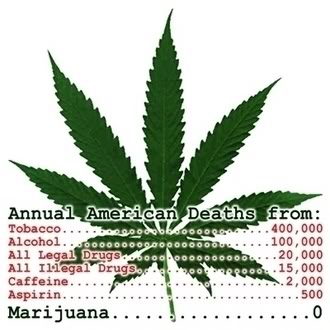
Marijuana vs. Alcohol and Tobacco
Why is marijuana illegal, but alcohol and tobacco are available and regulated?
People who support marijuana prohibition claim that marijuana is
unhealthy and dangerous. They say we need to keep drugs illegal to
protect our society from the addiction and disease that they cause.
These arguments are not consistent with the fact that the two most
deadly drugs in America are legal. Alcohol and tobacco are far more
addictive and harmful than marijuana, but they are legally available.
If we want to have drug policies that are logical and effective, we
need to legalize and regulate marijuana in a manner similar to the
regulation of alcohol and tobacco.
Alcohol
Tobacco
| |
Hemp
Hemp
is the industrial grade "cousin" of marijuana, used for paper, fiber,
food and fuel. Both hemp and marijuana come from the plant species
Cannabis sativa L., but hemp is bred for fiber or other uses, and it
contains almost none of the psychoactive ingredient (THC) that makes
users "high."
Hemp has a long and distinguished history of use to mankind. Hemp
rope and canvas sails once outfitted the world's sailing ships, and
Conestoga wagons were covered in hemp. Hemp seeds, rich in omega fatty
acids, have been used in traditional foods for centuries and are still
sold as birdseed in the U.S. Shelled hemp seed and oil are increasingly
used in natural food products, such as corn chips, nutrition bars,
hummus, nondairy milks, breads and cereals. In the last few years, the
hemp foods industry has grown from less than $1 million a year to over
$5 million in retail sales. Paper made from the strong hemp fiber is
used in many of the world's currencies. The U.S.D.A. has determined
that, acre for acre, hemp can produce four times as much paper as trees.
Hemp fiber and sterilized or processed hemp seeds can be imported legally into the U.S. (please see DEA Hemp Ban
for information on the now-defunct ban on foods containing hemp), but
hemp farming was effectively made illegal here with the Marijuana Tax
Act of 1937, which imposed a prohibitively high tax on cannabis
cultivation. Hemp was grown again in this country during World War II
under the U.S.D.A.'s "Hemp for Victory" program. Currently,
three states have passed laws allowing hemp cultivation.
Hemp offers many environmental advantages compared with other
natural resources. Unlike trees, it is an annually renewable resource,
and it doesn't require pesticides and herbicides like cotton does. The
cellulose in hemp and other crops could be used to replace
petrochemicals in plastics and fuels.
In the past several years, a hemp industry has re-emerged, with
hundreds of companies worldwide offering thousands of hemp products.
China, Australia, England, France, Spain, Hungary, Romania and Canada
are among the countries growing, using and exporting hemp. The U.S. is
the only major industrialized nation to prohibit the growing of
industrial hemp.
References
- Ernest L. Abel, Marijuana: The First 12,000 Years (New York: McGraw-Hill, 1982).
- Chris Conrad, Hemp: Lifeline to the Future (Novato, California: Creative Xpressions, 1994).
- Jack Herer, The Emperor Wears No Clothes (Van Nuys, California: Queen of Clubs Publishing, 1995).
- Rowan Robinson, The Great Book of Hemp (Rochester, Vermont: Inner Traditions International, 1995).
- Ed Rosenthal, Ed., Hemp Today (Oakland, California: Quick American Archives, 1994).
- John Roulac, Hemp Horizons: The Comeback of the World's Most Promising Plan (White River Junction, Vermont: Chelsea Green Publishing, 1997).
| |
|
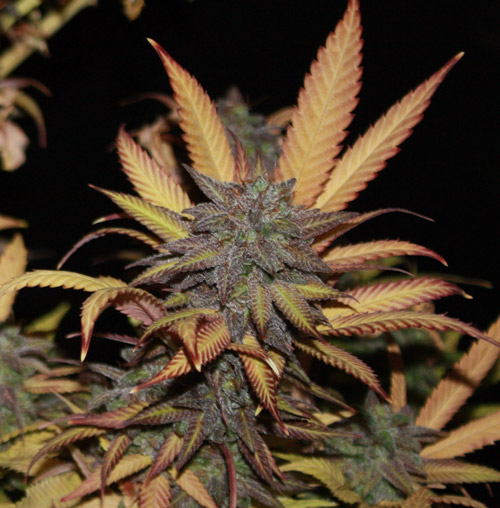
 Marijuana Bud Pics
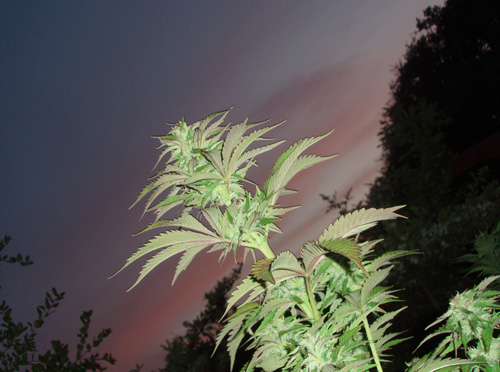
 Marijuana Leaf Pics
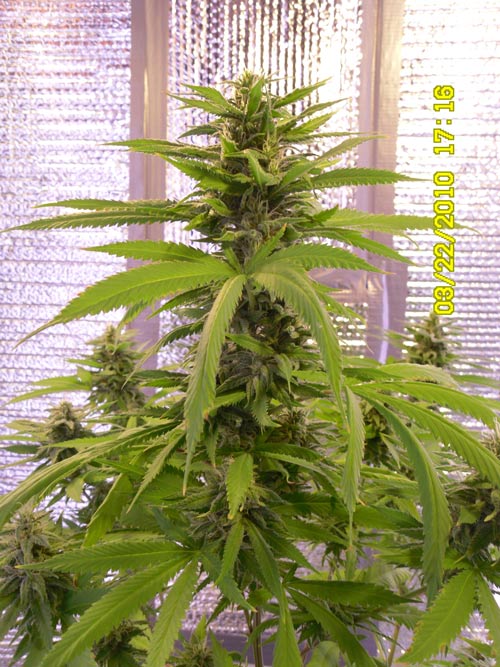
 Hydro Marijuana Grow Rooms
 Marijuana Wallpaper